Reactive Corgi: Why Corgis React on Leash (and How to Help)
Why Corgis bark and lunge at other dogs on leash, what it looks like, and the specific steps that help.
Why Corgis can be leash reactive
Corgis are herding dogs in a small body: alert, vocal and bossy about movement. Many bark at moving dogs and try to control them.
What it usually looks like
Sharp barking at other dogs, especially moving ones, and sometimes heel-nipping behavior at the end of the leash.
What helps Corgis specifically
- Give the herding brain jobs: trick training, treibball-style games, scent work.
- Reward looking away from moving dogs.
- Practice pattern games for predictability.
The 4 steps that work for most reactive dogs
- Stop the daily blow-ups first. Walk at quieter times, on routes with wide views, and swap some walks for sniff walks. Why this matters.
- Find your dog's safe distance, where it can notice a dog and still take a treat. The 10-minute distance test.
- Teach a few simple skills at home: a marker word, name-turn, hand touch and an emergency U-turn.
- Make other dogs predict good things with short "Look at That" sessions. Step-by-step guide.
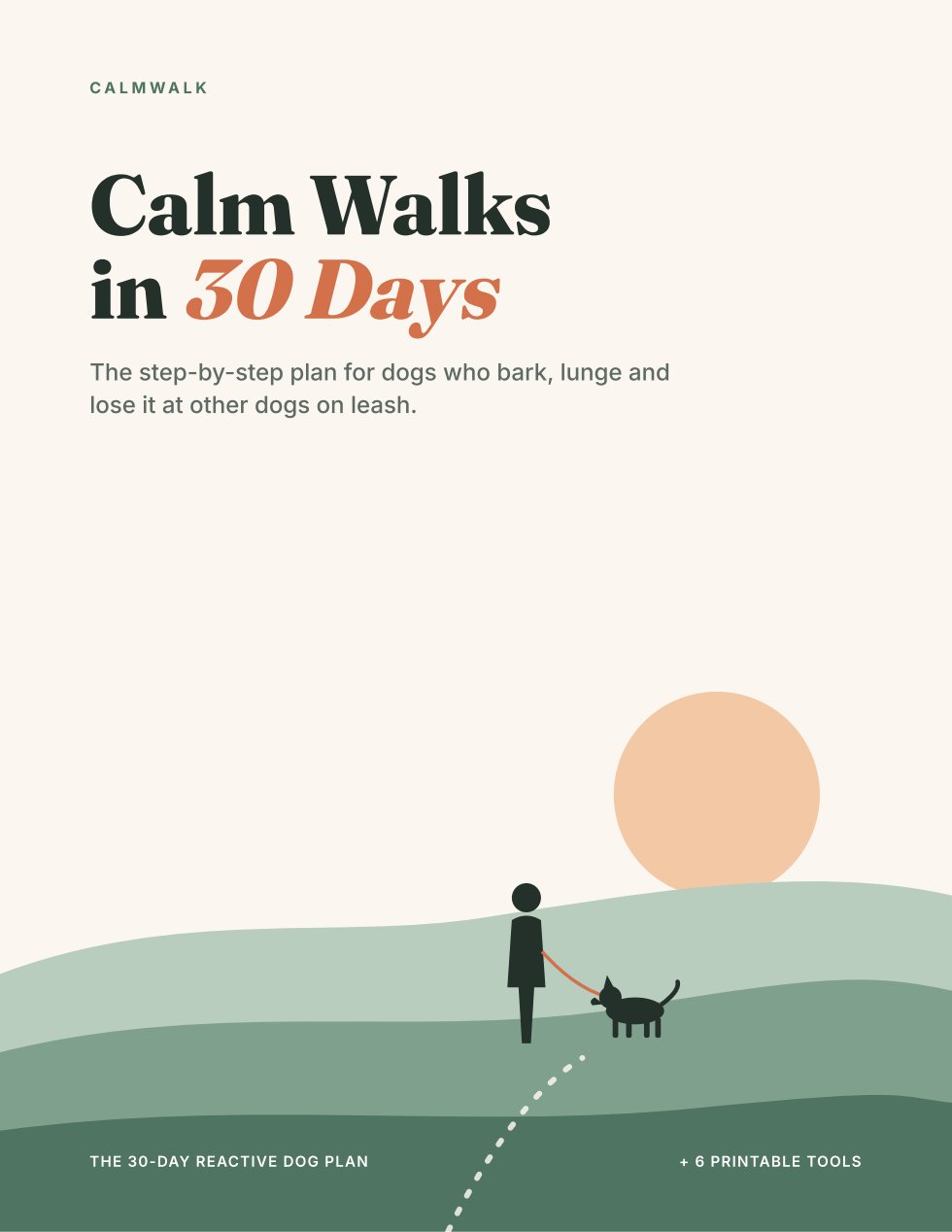
Calm Walks in 30 Days
The 30-day plan for dogs who bark, lunge and lose it at other dogs on leash. 10–20 minutes a day, reward-based, 6 printable tools.
See the plan →Not sure yet? Take the free 2-minute quiz
A note on safety
Protect their long backs: harness only, no jumping and twisting at the end of the leash. If your dog has bitten, or the behavior started suddenly, talk to your veterinarian and a certified, reward-based behavior professional.
Other breeds
- Reactive Weimaraner
- Reactive Pit Bull
- Reactive Labrador Retriever
- Reactive Dachshund
- Reactive Shiba Inu
- Reactive Boxer
- All breeds
Educational content from the CalmWalk team. Not veterinary or behavioral advice for your specific dog. If your dog has bitten, or behavior changed suddenly, see your veterinarian and a certified professional.